|
 Photo
Photo
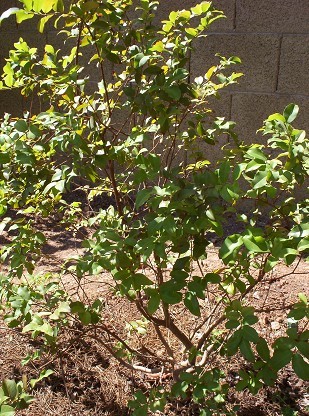
The small Jaboticaba tree on the right was photographed in June. It was planted
in early July of the previous year. July would normally seem to be a hazardous
time to plant a tree, but it worked out well because even though it was hot
it was also very humid. Hot dry weather is generally much harder on tropical plants than hot
humid weather. In fact, many tropical plants and citrus in the Phoenix area have a spurt of growth
in July when the humidity rises.
This Jaboticaba was ordered from Florida by mail. Fortunately, my front courtyard faces north so the
tree, in its box, was waiting in the shade after they dropped it off. If it had been sitting
in the summer sun for even half an hour it might not have made it. Ordering plants in the summer
is always risky so everything has to be considered when doing so.
This jaboticaba tree is growing on the north side of a 6 foot block wall (4 ft. away) and on the east side
of a large pine tree at its drip line (6 ft. away), so it receives afternoon shade and protection from hot southern exposure.
Overview
Jaboticaba trees grow well in Phoenix when they receive afternoon shade and sufficient water.
They are slow growing and are salt sensitive so only mild organic fertilizers should be applied to them.
Being as hardy as citrus, jaboticabas are not susceptible to freeze damage in the Phoenix area.
Jaboticaba fruit are reported to be delicious. However, the tree can take many years to fruit
so only plant it if you are willing to wait 5 plus years. I have had no fruit on mine yet.
Heat Tolerance and Sun Exposure
Jaboticaba trees need afternoon shade. Other than that they take the heat well.
Cold Tolerance
Being hardy to 24 F., similar to citrus,
jaboticaba trees can take all but the most extreme Phoenix weather without problems.
Planting
Dig a hole at least twice the size of the rootball. At a minimum, make the
hole 2 feet in diameter and 2 feet deep.
Back fill the whole with the same native soil that was removed.
It also is a good idea to finish with the
hole an inch or two recessed so that a watering basin is formed.
After planting, spread a thin layer of compost
on top of the soil to help conserve moisture and to
supply some nutrients.
Do not fertilize the newly planted tree until it has been vigorously growing for
a couple of months.
Watering frequency
Jaboticabas do well on a grass watering schedule. The natural
habitat of this tree is very wet, so it is actually very difficult to overwater it. In the summer
in Phoenix, giving the tree a good soak between scheduled waterings can be beneficial.
Watering method
Basin irrigation
is recommended because it helps keep the salt in our salty
water from accumulating around the roots. Furthermore, deep watering
will encourage the plant to develop deeper roots, making the plant tougher when the weather
gets hot and dry.
Fertilizing and Growth Rate
Jaboticabas do well with monthly light applications of Alaska Fish Emulsion 5-1-1 during warm and hot weather.
Stronger fertilizers and fertilizers containing more potassium and phosphorus tend to burn them.
A thin layer of compost around the tree's base will help keep the soil moist and provide additional nutrients.
Propagation
Jaboticabas are grown from seed and from leafy cuttings.
Pests
No known pests in Phoenix Arizona.
Links to more jaboticaba information
Jaboticaba - CRFG
Jaboticaba - Wikipedia
Jaboticaba - Julia Morton
|
 Join The Phoenix Tropicals Gardening Forum On Facebook
 Book the Phoenix Tropicals Condo on Kiahuna Beach, in Kauai, Hawaii