 Join The Phoenix Tropicals Gardening Forum On Facebook
Growing Ambarella In Phoenix Arizona |
| Books | Buy Plants | Fish Emulsion | Forum | Frost Damage |
| Homepage | Landscape | Links | Plant Nursery | Search | Soil |
| Terms | Travel | Vitamin and Nutrient Deficiency | Watering |
|
Join The Phoenix Tropicals Gardening Forum On Facebook
|
| Aeoniums | Ambarella | Atemoya | Avocados | Bananas |
| Cherry | Citrus | Grapes | Grass | Guavas | Hibiscus |
| Jaboticaba | Lemon Grass | Loquats | Lucuma | Lychees |
| Mangoes | Miniature Rose | Orchid Trees | Pacay | Papaya |
| Passion Fruit | Peaches | Pineapples | Plumerias |
| Tropical Bird Of Paradise | Tuberose | White Sapote | Vegetables |
 Book the Phoenix Tropicals Condo on Kiahuna Beach, in Kauai, Hawaii Book the Phoenix Tropicals Condo on Kiahuna Beach, in Kauai, Hawaii
|
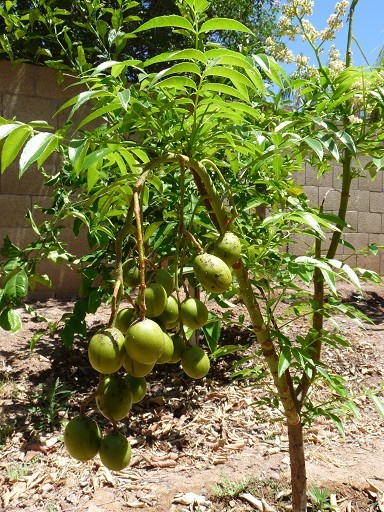
Photo This ambarella takes the Phoenix heat very well, except for a little bit of sunburn on its trunk, and it grows continuously during warm weather. I protect it with frost cloth draped over a pvc structure on the coldest winter nights as a precaution. It lost all of its leaves during the winter, except for some tiny shoots near its branch tips, and didn't really start growing again until April. This tree flowered during the fall and held its fruit all winter, which looked unusual since it did not have leaves then. The fruit are still not ripe and the ones most exposed to the sun have gone bad, but the more sheltered fruits appear to be in good condition. I was inspired to grow ambarella after eating the fruit from a tree in Hawaii, where they are called vi apples. They were delicious.
Overview
Heat Tolerance and Sun Exposure
Cold Tolerance
Planting After planting, spread a thin layer of compost on top of the soil to help conserve moisture and to supply some nutrients. Do not fertilize the newly planted tree until it has been vigorously growing for a couple of months.
Watering frequency
Watering method
Fertilizing and Growth Rate
Propagation
Pests |